
How Can You Tell If Your Main Water Line Needs Repair Before Winter? | Water Line Repair in Mansfield, TX
North Texas winters may be short, but a sudden cold snap can turn a small underground leak into a cracked pipe and a muddy yard. If you’re noticing unusual water behavior around your home, now is the time to pay attention. When symptoms point to a main service line issue, scheduling professional water line repair before the first freeze helps protect your foundation, yard, and water bill.
What Your Main Water Line Does In A Mansfield Home
Your main water line runs underground from the city meter to your home. It must withstand shifting clay soils, temperature swings, and regular pressure. In Mansfield neighborhoods like South Pointe, Walnut Creek, and Mira Lagos, soil can swell after fall rains and then tighten when a blue north wind dries things out. That movement strains older copper, PVC, and galvanized lines. Add a hard freeze, and weak spots can open up fast.
Clear Warning Signs Before The First Freeze
Most main line problems start quietly. Look for patterns across the whole home rather than a single sink or shower. These signs often show up weeks before winter really hits:
- Sudden, whole-home low water pressure that makes every faucet feel weak, not just one bathroom.
- A sharp spike on your water bill without a change in routine, guests, or irrigation schedule.
- Persistent wet or squishy spots in the yard, often near the meter box, driveway edge, or a front walkway.
- Air sputtering from multiple fixtures when you first turn the water on.
- Cloudy or slightly rusty water throughout the house right after the line sits for a bit.
- A faint hissing sound near the meter box or where the line enters your home.
One slow faucet usually points to a fixture or branch line issue. Whole-house symptoms are different. They suggest the problem is on the service line feeding everything inside.
Why Winter Makes Small Leaks Worse In North Texas
Our weather can swing from chilly mornings to warm afternoons. That expansion and contraction puts stress on buried pipes. Icy mornings followed by warm afternoons can widen tiny cracks, especially where a line transitions through the foundation or passes under a driveway. If roots or dry soil already weakened the pipe over the summer, the first freeze amplifies the damage. Catching those warning signs in October or November gives you a safer window for a controlled, professional repair.
Service Line Or Something Inside? How To Tell Them Apart
Think about where and how symptoms appear. If only the kitchen sink struggles, it’s likely local to that fixture. If every shower and tap goes weak at once, the issue is upstream. Yard clues matter too. A soggy strip along the front lawn, soil settlement near the walkway, or a meter that never seems to “rest” point to the service line. Discoloration or damp drywall indoors without outdoor clues may suggest a different supply run or a slab leak under part of the home.
If you’re seeing urgent red flags like sewage backups or water pooling indoors, this explainer on plumbing emergencies you should never ignore outlines why quick, professional help protects your family and finishes.
Local Conditions That Push Pipes To Their Limits
Mansfield sits on clay-rich soils that shrink during summer droughts and swell when fall rains arrive. Large shade trees in established neighborhoods can seek out moisture and surround older lines. Newer subdivisions have straighter runs, but shallow cover near sidewalks and driveways can still stress piping. Homes with additions or patio extensions sometimes have water lines routed around obstacles, which adds joints where movement concentrates.
Local insight: After our first hard freeze, calls often spike from homes that already had subtle warning signs. Acting when you notice whole-home pressure drops or yard wet spots can prevent landscape repairs and foundation stress later in the season.
How A Pro Confirms A Water Line Leak
A licensed plumber doesn’t guess. They use targeted tests to pinpoint the problem and confirm the fix:
- Acoustic listening to pick up leak noise along the route and near transitions into the foundation.
- Pressure and isolation testing to verify whether the issue is on the service line or a branch inside.
- Safe tracing methods to map the route in yards with tricky access, trees, or hardscape.
- Thermal or moisture readings at the entry point to your home to catch hidden seepage.
When symptoms are under floors, the same team can perform precise slab leak detection to rule in or out a leak beneath the concrete. The goal is to expose as little as possible, repair once, and verify with final tests.
What Professional Water Line Repair Looks Like
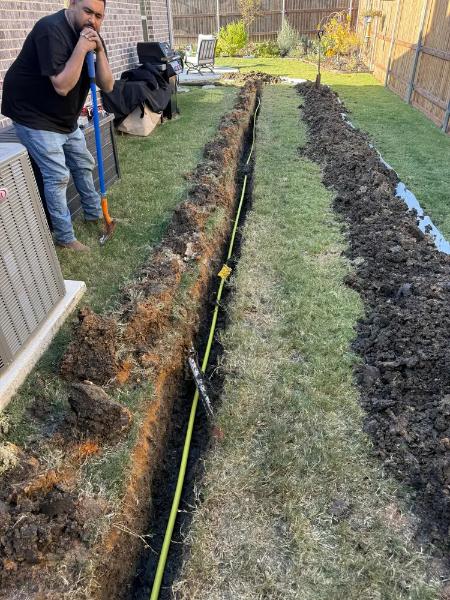
No two yards or homes are identical, so the repair approach depends on line depth, material, and access. Some properties are strong candidates for sectional replacement through small access points. Others benefit from a direct, narrow trench and a durable reroute that bypasses problem soil or tree roots. In many Mansfield homes, the best long-term result pairs a clean repair with upgraded shutoff valves and a checked pressure regulator so the system stays in a safe range.
Permits and inspections vary by neighborhood and project scope. A licensed plumber will explain what applies to your property, coordinate with inspectors when needed, and document the repair so you have clear records for the future.
Real-World Scenarios Around Mansfield, TX
Here are situations our area sees every fall and winter:
Front-lawn soggy ribbon near the meter: Often a small split on the service line that wicks to the surface along the shallowest section. Left alone, it can undercut walkways or driveways as soil shifts with rain and cold.
Whole-house pressure slump after a storm: Water finds a new path through soft, saturated soil, and the weak spot opens further during the next temperature drop. If fixtures also gurgle or spit air, the leak may be pulling air into the system.
Warm spot at the entry point in a slab home: That can be a hot-side leak just inside the foundation. It may not be the meter-to-house line, but it needs the same level of testing to confirm the source before winter.
Timing Matters: Why “Before Winter” Is Smart
Scheduling in late fall gives you better ground conditions than a mid-winter emergency and more flexibility on routing. Crews can protect landscaping and plan around roots or hardscape with less rush. If a replacement makes more sense than a patch, cooler months are often easier on lawns than spring or summer. You also reduce the chance of a surprise outage during holiday gatherings.
What You’ll Get From A Thorough Repair Team
The right partner focuses on accuracy, clear communication, and lasting results. Expect a straightforward diagnosis, options that consider your yard and foundation, and photos of the problem areas. You should also expect pressure testing after the work so there are no surprises later. When the job wraps, the technician will explain what was done, what materials were used, and how the repair protects your home through the winter ahead.
When Trees And Older Lines Intersect
Roots chase moisture, and older materials can be easier to penetrate or shift against. If you live on a mature street with big shade trees, a reroute around the heaviest root zones may save you from repeat failures. For more on how roots affect underground piping, this short read on how tree roots can damage your sewer line explains why location and depth matter.
Choosing A Local Pro You Can Trust
Look for a licensed, insured company that explains the testing plan first, then the repair path. Ask how they protect landscaping, how they verify success, and what warranty supports the work. A team that handles both diagnostics and repair keeps communication simple and helps you avoid repeat excavations. You should feel confident that your service line is built to handle clay soil movement and winter temperature swings.
Ready For Winter? Get A Pro Assessment
If the signs are stacking up at your home, it is best to verify the source now. You can start with a quick conversation and a scheduled on-site evaluation. For reliable help close to home, trust Onyx Ridge Building Solutions. Our licensed team pinpoints the problem, explains the options, and completes the fix the right way for our soils and seasons. When it comes to water line repair in Mansfield, TX, clear testing and careful workmanship make all the difference.
Call us at 817-948-2020 to schedule your visit, or learn more about our approach to main line issues on our water line repair page. If your symptoms suggest a different source under the home, we’ll route you to the right specialist on our team and coordinate next steps, so you head into winter with confidence.
Contact Us Today
We're Ready to Help!